
{主关键词}
天行九歌
6 killed in Russian attacks on Ukraine as Kyiv continues drone counterstrikes_我的网站

A |
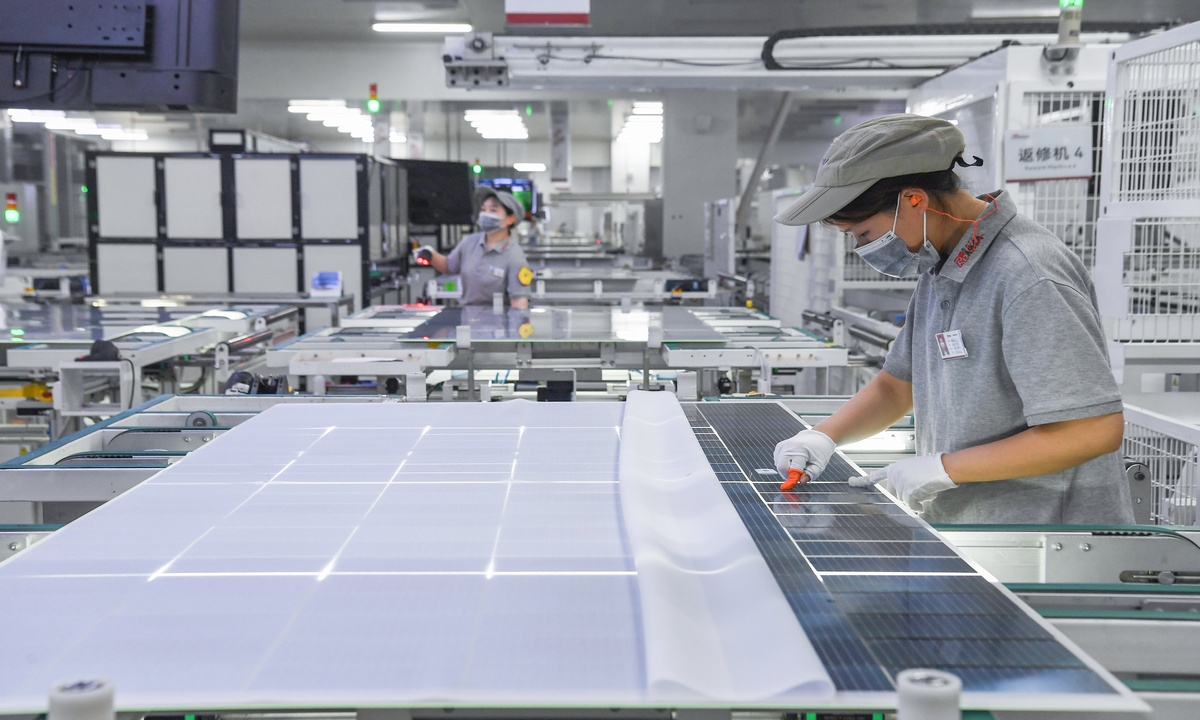
China saw robust exports in electric vehicles (EV), lithium batteries and photovoltaic products, known as the "new three," in the first half of this year. More notably, robotics, artificial intelligence (AI) and innovative drugs, which represent the future direction of industrial development, are also emerging as new calling cards for China's foreign trade.
However, the impressive performance provoked unease among some Western media outlets and politicians. Some have deliberately portrayed China's rapid industrial development and strong competitiveness as a result of government subsidies, pushing the false claim that subsidies have created overcapacity and those low-priced Chinese products are flooding global markets. Such fallacies, which simply equate industrial subsidies with overcapacity, are not only logically flawed but also factually groundless.
In practice, many countries adopt industrial policies tailored to their national conditions and development needs, such as providing research and development (R&D) subsidies for emerging industries and risk related subsidies for agriculture.
Well-designed industrial subsidies can help address market failures, promote technological innovation and environmental protection, reduce poverty and support balanced development, rather than cause so called "overcapacity."
Multiple reports by the United Nations Conference on Trade and Development have noted that the number of industrial policies worldwide has grown rapidly over the past five years, with R&D subsidies, tax incentives and low interest loans for emerging industries becoming common international practices.
Forcibly linking industrial subsidies to "overcapacity" is, in essence, a political manipulation based on double standards. The US, for example, plans to provide $750 billion in various subsidies from 2022 to 2031 under its Inflation Reduction Act. Subsidized EVs are subject to requirements such as production and sales in the US or North America, effectively excluding other WTO members. US industrial subsidies for AI are even greater than those of all other countries combined.
Similarly, according to incomplete statistics, the European Commission is expected to provide more than 1.44 trillion euros ($210 billion) in various subsidies between 2021 and 2030. The EU's Industrial Accelerator Act links local content directly to financial support through "Made in EU" requirements, creating serious investment barriers and institutional discrimination.
Have these massive subsidies been labeled as causing "overcapacity"? The answer is no. While claiming that China's industrial subsidies lead to so-called overcapacity, these countries are themselves providing massive subsidies to their own industries. Such double standards amount to selective accusations targeting China, aimed at politicizing trade and economic issues and weaponizing industrial policy.
At a deeper level, accusations that "China's industrial subsidies cause overcapacity" are merely a pretext, reflecting growing anxiety and fear over the rising competitiveness of Chinese industries.
Looking back at the repeated hype in Western media, the criticism has consistently targeted China's most globally competitive industries, including new-energy vehicles, photovoltaics and power batteries. This exposes the real intention of shifting the blame for their own lagging industrial development onto China while stepping up restrictions against Chinese industries.
China's breakthroughs in these industries have been driven by advances in homegrown technologies, complete industrial and supply chains, and robust market competition, rather than by policy subsidies as some have claimed.
In recent years, China has taken multiple steps to regulate and improve its subsidy policies, from reviewing and correcting inappropriate local subsidies to exploring a unified negative list mechanism for local fiscal subsidies. China applies subsidies equally to all market entities, including foreign invested enterprises, strictly follows WTO rules, and continues to improve the compliance, effectiveness and transparency of its subsidy policies.
Rather than fabricating and hyping baseless claims about subsidies and obsessing over building trade barriers, certain Western media outlets and politicians should focus on addressing their own weaknesses and increasing investment in research and development. They should embrace healthy market competition with an inclusive mindset, promote mutual benefit through greater openness, and win markets and drive progress through genuine innovation.
This was compiled and translated by the Global Times English edition based on an article published in the "Chisu Jinsheng" economic commentary column of the People's Daily on August 10, 2026.
。 KYIV, Ukraine -- Six people have been killed in Russian attacks on Ukraine in the past 24 hours, local officials reported Sunday.Two people were killed and three more injured in the Kherson area after more than 100 shells bombarded the region over the weekend, local governor Oleksandr Prokudin wrote on social media.Two guided bombs later hit key infrastructure in Kherson city, sparking a partial blackout and disruption to the area’s water supply, reported the head of the city’s military administration, Roman Mrochko.Local officials said two more people had died in the Donetsk area and that a 57-year-old man and a 54-year-old woman had been killed by an airstrike that destroyed their home in the Kharkiv region.Meanwhile, the Russian defense ministry announced Sunday that Ukraine had launched 27 drones in an overnight attack on western Russia.Officials said that 18 drones were shot down over the Kursk region, leading to speculation in the Russian press that the attack could have been targeting the nearby Khalino military airfield.Images on social media showed burning debris just 1.5 kilometers (a mile) from the airbase, which was previously attacked by Ukrainian forces at the end of September.Writing on social media, Kursk governor Roman Starovoit said that debris had fallen in the region’s namesake capital and the nearby village of Zorino. No casualties were reported.Officials also said that two more drones had been shot down over Russia’s Belgorod region, but did not confirm the fate of the remaining seven drones. Ukrainian media outlets later said that Kyiv’s forces had carried out a successful strike on Russia’s Krasnaya Yaruga electrical substation, close to the Ukrainian border.The reports cited an unnamed source from within Ukraine’s security services and included a video that appeared to show an aerial strike against an unidentified target.The Associated Press could not independently verify the reports.Moscow also said Sunday that it had intercepted a Global Hawk drone close to Russia’s Black Sea border.A Su-27 fighter was scrambled to intercept the drone, which turned away and ultimately did not cross into Russian airspace, the Russian defense ministry said in a statement on social media.。
Current article:http://cwa.chaochangkuanbandangyogeseng.sbs/rnarqe/c99c.html
Published on:06:58:14
- 4356泉城骑行 温暖同行
- 224【仓单】8月26日郑商所菜油期货仓单较上一日持平
- 928总冠军还是纽约荣耀?37岁杜兰特,正在面对职业生涯最后选择
- 4501Malayalam Actor-Director EA Rajendran Passes Away at 71
- 2570北京京和堂医院诱导患者夸大病情,诱导患者使用天价针灸谋取利益
- 59305《漫威斗魂》官方承认 PC 版首发表现令人失望,将全力挽回玩家信任
- 203717疯了!快船两年1320万签回得分王!第二年球员选项!
- 3669256勇记:今夏勇士引援工作基本结束 尼昂出勤率极高 能拉开空间
- 6116离大谱!RTX 5090整机竟比单卡还便宜800块
- 589Leaders of 22 NATO Allies Launch Defense Innovation Fund Worth $1.05Bln
- 323726下班快回家!哈尔滨发布雷雨大风黄色预警!
- 5891西港警方驱逐两中国人
- 6926281个名额!重压之下,樊振东缺席世乒赛,温瑞博能否扛起国乒新希望
- 2927794斯科特:科比在18岁时就立志成为历史最佳 他甚至在黑暗中投篮
- 744601插混动力/综合续航1360km 定价是关键!一文看懂新款沃尔沃XC60
- 643阿里新股配售 中东、欧洲、亚洲主要主权基金积极认购
- 4663864Exclusive: Naoero president, Chinese ambassador cycle island together passing China-supported projects, Chinese-run retail stores
- 304性感丰乳大白腿!尺度夸张!国产武侠新作美女角色引玩家热议
- 7948月26日“农产品批发价格200指数”比昨天上升0.15个点,8月26日“农产品批发价格200指数”比昨天上升0.15个点
- 79904曼晚:曼联有意布莱顿左后卫卡迪奥卢,报价4000万至5000万英镑
- 354曼联近13赛季积分:1次夺冠、2次第2、6次没进前5,本赛季最低
- 492三大台风将如何影响我国
我的网站热门国内
- Copyright @ 2016-2017 我的网站 版权所有